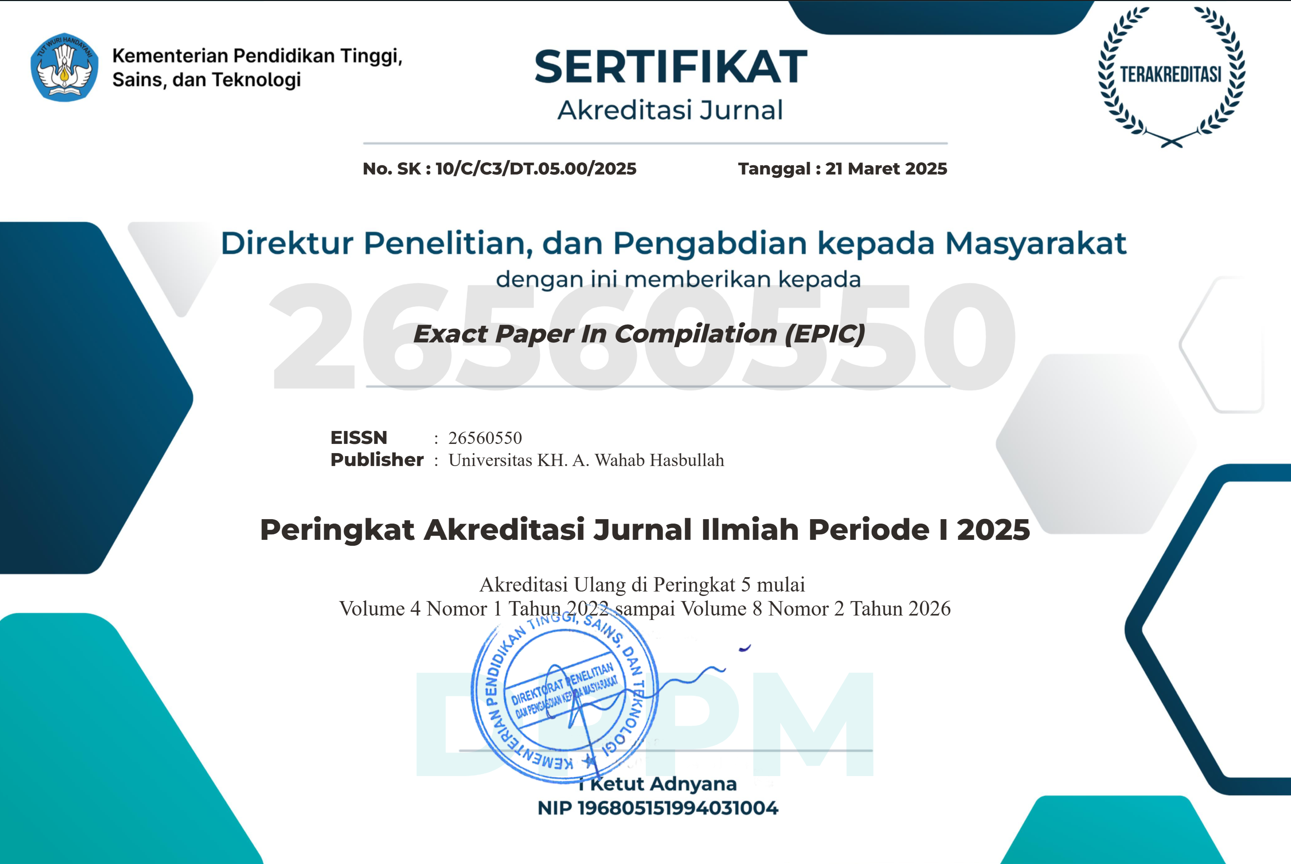
Certificate

Journal EPiC welcomes constructive discussion of its published articles. Publication does not end scholarly evaluation. Readers, authors, and other members of the research community may raise questions, offer alternative interpretations, identify errors, or submit evidence-based concerns about published work.
Post-publication discussion should promote scientific understanding, transparency, and the accuracy of the scholarly record. Contributions will be assessed on their scholarly merit, relevance, clarity, and supporting evidence rather than on whether they support or challenge the original article.
The journal welcomes correspondence concerning:
Comments, requests for clarification, and concerns should be submitted through the official editorial contact provided on the journal’s. Correspondents should indicate that their message concerns a published article.
Submissions should include:
Anonymous concerns may be assessed when they provide specific and verifiable evidence. Formal comments intended for publication normally require identifiable authorship and an appropriate conflict of interest disclosure.
Comments must address the scholarly content of the article and use respectful, professional language. Criticism of methods, evidence, or conclusions is welcome; personal attacks, harassment, discriminatory language, and unsupported accusations are not acceptable.
Correspondents should distinguish demonstrable errors from differences in interpretation. Relevant uncertainty and limitations in the evidence should be acknowledged. Confidential or personally identifiable information must not be disclosed without an appropriate basis.
The editorial team will assess whether a submission raises a substantive issue and whether it requires clarification, independent review, an author response, or action under another journal policy.
Where necessary, an independent subject specialist, statistical reviewer, or other qualified adviser may be consulted. Editors with a relevant conflict of interest will not determine the outcome.
Submission of correspondence does not guarantee its publication. The journal may request revisions, combine overlapping points, or decline comments that are irrelevant, repetitive, unsupported, or inconsistent with professional standards. A decision not to publish a comment does not remove the obligation to assess any credible integrity concern it contains.
Authors will normally be given an opportunity to respond to substantive criticism of their article. They may be asked to clarify methods, provide supporting evidence, explain disputed findings, or address a proposed correction.
Responses should address the specific issues raised and maintain a professional tone. An author’s failure to respond will not automatically prevent the journal from publishing a justified comment or taking appropriate action to protect the scholarly record.
Where appropriate, the journal may publish an accepted comment together with an author response or an editorial explanation. Published discussions should identify and link to the article concerned, and the article record should link to the discussion wherever technically feasible.
Correspondence submitted for confidential assessment will not automatically be published as a signed contribution. Publication arrangements and attribution will be communicated to the contributor as appropriate.
Editors may close an exchange when the substantive arguments have been adequately presented. New evidence affecting the reliability or integrity of the article may still be considered after an exchange has closed.
When discussion identifies a problem in the published record, the journal will determine an appropriate response according to the evidence and the seriousness of the issue. Possible actions include:
Substantive changes will be documented through an identifiable notice rather than an undisclosed replacement of the published article. Notices should explain the reason for the action and be linked to the affected work.
New research findings should normally be submitted as a separate manuscript rather than added to an existing article through a correction.
Suspected plagiarism, fabrication, falsification, unethical research, or other serious misconduct will be handled under the journal’s relevant ethics policies. Such concerns require evidence-based assessment and will not be treated merely as an ordinary debate between authors and readers.
Where appropriate, the journal may contact the relevant institution or responsible authority. Information will be shared only as necessary for a fair assessment, investigation, or editorial action, subject to applicable legal obligations.
Substantive concerns about the accuracy or integrity of published content may be raised regardless of the article’s publication date. Assessment times will depend on the complexity of the issue, the availability of evidence, and the need for independent advice or institutional investigation.
A request for reconsideration should identify new evidence or a specific procedural concern. Repetition of previously assessed arguments alone will not normally justify reopening a case.
This policy draws on guidance from the Committee on Publication Ethics (COPE) concerning post-publication discussions and corrections . Reference to COPE guidance does not imply COPE membership.
 Download (DOCX)
 Submit Your Paper