Certificate
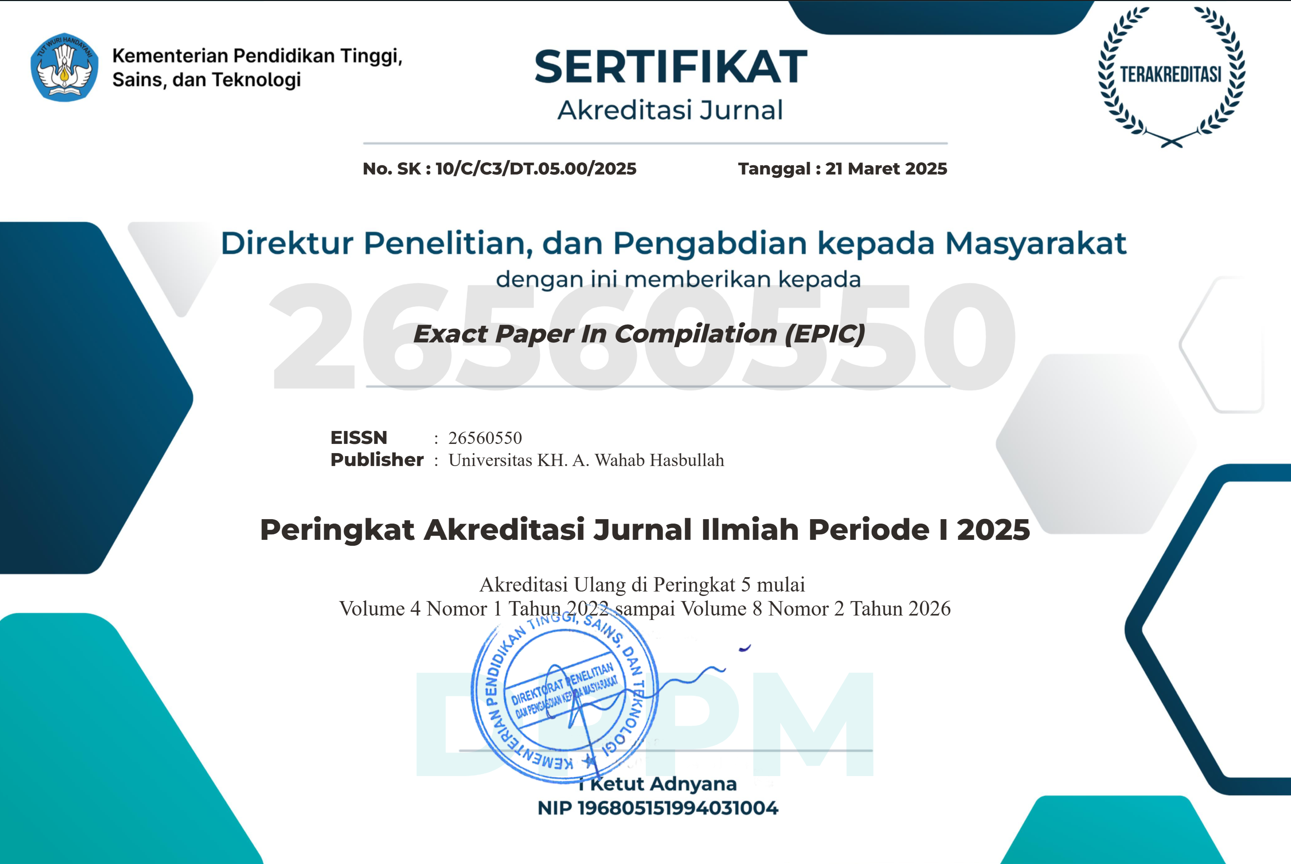

Journal EPiC is published by LPPM KH Wahab Hasbullah University. This statement explains the journal’s institutional publishing arrangement, management responsibilities, and principles of editorial governance.
LPPM KH Wahab Hasbullah University, is the journal’s institutional publisher. The journal is presented through the university’s online journal platform. The institutional publishing arrangement is distinct from copyright ownership in individual articles. Article copyright and permitted reuse are governed by the journal’s Copyright and Licensing policy and the license displayed in each article.
Under this governance framework, the publisher is responsible for supporting the journal’s institutional continuity, publishing infrastructure, and administrative accountability. The publisher works with the editorial team and relevant technical units to support reliable publication and access to the scholarly record.
Institutional oversight should support research integrity and transparent publishing practices without improperly influencing decisions on individual manuscripts.
The Editor-in-Chief leads the editorial management of the journal, with support from handling editors, editorial board members, and editorial staff. Their responsibilities include:
The names, roles, and institutional affiliations of current editors should be maintained on the journal’s Editorial Team page and updated when appointments change.
Editorial staff and authorized technical personnel support the operational aspects of publishing. Their responsibilities may include:
Access to confidential manuscripts, reviewer information, and editorial records must be limited to personnel who require it for their assigned responsibilities.
Decisions on individual manuscripts must be based on their scholarly contribution, methodological quality, relevance, and compliance with journal policies. Institutional relationships, financial considerations, or personal interests must not determine acceptance or rejection.
Manuscripts submitted by editors, editorial board members, or individuals with close connections to the handling editor must be assessed through an appropriately independent editorial process.
The journal should provide accurate and current information about its publisher, formal owner, editorial leadership, contact channels, and applicable author fees. Any material change in ownership, publishing responsibility, or editorial governance should be communicated on the journal’s website.
Information about accreditation, indexing, partnerships, or preservation services must be presented separately from ownership and management information. Such relationships do not, by themselves, establish ownership or editorial control.
Questions about the journal’s publishing arrangement, editorial management, or administrative responsibilities may be directed to the official contacts listed on the journal.
Complaints involving an editor should be referred to an appropriate representative without a relevant conflict of interest. Matters involving the Editor-in-Chief should be escalated to the publisher or another authorized independent representative.
 Download (DOCX)
 Submit Your Paper